
What GamStop Covers and Why Offshore Sites Sit Outside It
 Available in GB
Once you see how GamStop is wired, the question of why offshore casinos slip past it stops being mysterious. The scheme is not a magic firewall covering the whole internet. It is a shared database that a specific set of licensed companies are required to check. If a casino is not part of that set, the database never touches it. That is the whole story, and the rest of this page fills in the mechanics.
Who runs GamStop and what it is
GamStop is the national online self-exclusion scheme for Great Britain. It is operated by The National Online Self-Exclusion Scheme Ltd, usually shortened to NOSES, which trades as the GamStop Group. The service launched in April 2018 and has grown into a core piece of the UK’s player-protection infrastructure. By the end of 2025 just over 562,000 people were excluded through it, and nearly 600,000 had registered at some point since launch, equivalent to around 1% of UK adults.
The full picture is in our guide to casinos not on GamStop.
The basic idea is consent-led. A person voluntarily signs up, and from that moment every participating gambling site is supposed to recognise them and refuse service. It is a way of putting a decision you make in a calm moment into effect during the moments when willpower alone might not hold. If you want to see where this fits in the wider picture, the non-GamStop workaround in full guide ties the scheme to the offshore sites that sit beyond it.

How the database actually blocks access
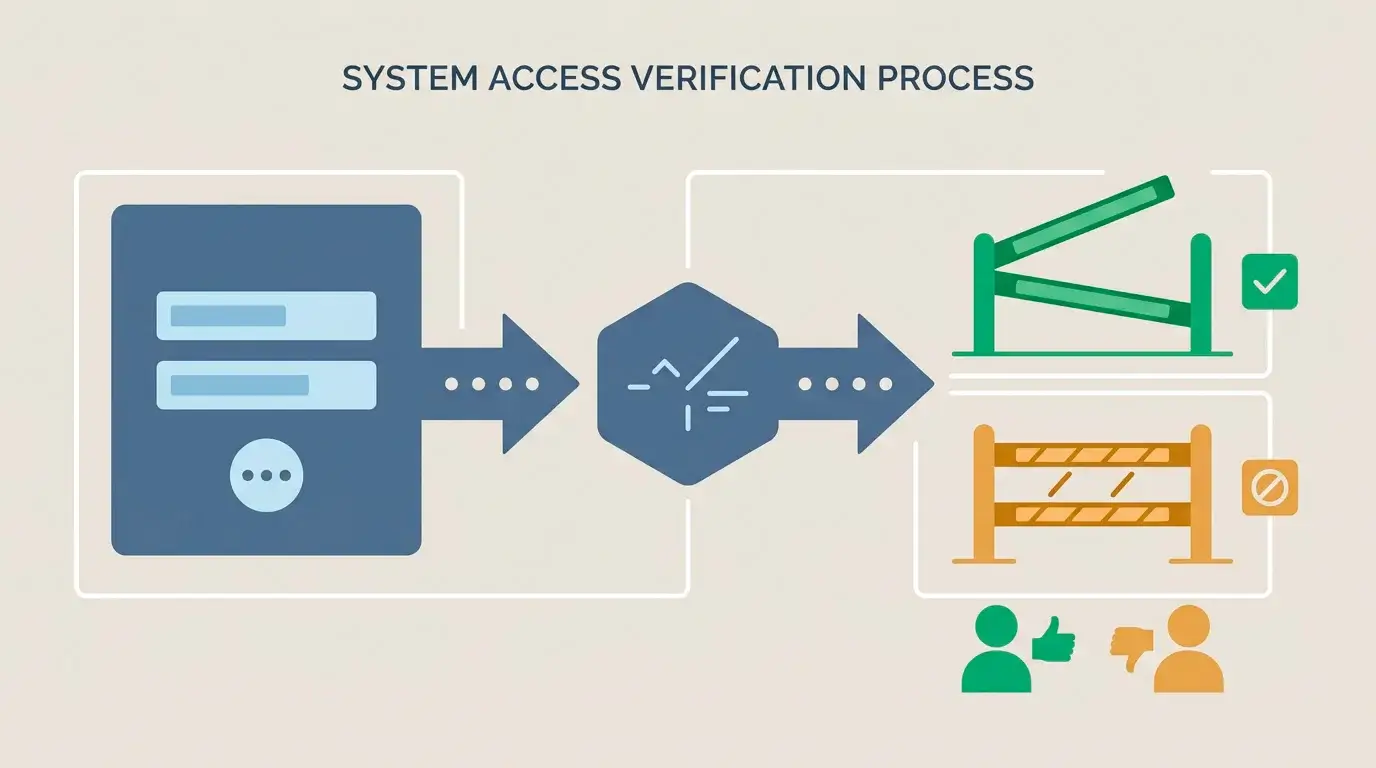
Around 2020, integrating with GamStop became a mandatory condition of holding a UK Gambling Commission operating licence. In practice that means every licensed remote operator must connect to the GamStop database, check each customer against it at registration and login, and block anyone who has self-excluded. The check happens on the operator’s side; the player does not have to do anything beyond the initial sign-up.
This is the mechanical heart of the matter. The scheme works by obliging licensed businesses to interrogate a shared list. It has no power to reach into a website that is not obliged to consult that list in the first place. The Gambling Commission’s authority to impose this condition flows from the framework set out in the Gambling Act 2005, which created the licensing regime in the first place.
You can read the operator’s-eye view of the requirement directly from the scheme itself. GamStop publishes the integration obligations and the consumer-facing registration flow, and it is the authoritative source if any figure or rule on this page has shifted since publication.
Exclusion periods and the rule you cannot undo
When you register you choose how long the exclusion lasts. The options are six months, one year or five years, with a five-years-with-auto-renewal choice added in December 2024 to give people the practical equivalent of a lifetime block. The exclusion activates within 24 hours of sign-up.
One rule trips a lot of people up: a term can be extended but not shortened. There is no early cancel button. If you choose a year, that year runs to the end regardless of how you feel three weeks in. After it expires, access is not switched back on automatically; you have to take deliberate steps, which we cover in how removal actually works. The deliberate friction is the point of a self-exclusion tool, not a flaw in it.
- Six months
- The shortest option, increasingly popular with younger registrants using it as a flexible, preventative reset.
- One year
- A middle ground for a firmer break without committing to the maximum.
- Five years
- The most popular choice overall, accounting for roughly 47% of recent registrations.
- Five years with auto-renewal
- Introduced December 2024; rolls on until you actively opt out, functioning as a near-lifetime block.
What GamStop does not cover
This is where the offshore gap becomes obvious. GamStop’s reach is defined by who is obliged to check it, so anything outside that obligation is simply invisible to the scheme. Three categories sit outside it.
- Land-based venues. Betting shops, casinos and arcades run their own separate self-exclusion arrangements; the online scheme does not extend to them.
- National Lottery products bought in retail. A scratchcard or lottery ticket purchased over the counter is not caught by the online database.
- Any site licensed outside the UKGC. A casino licensed in Curaçao, Anjouan or Malta holds no UK licence, so it has no obligation to connect to GamStop and never does.
That third category is the workaround in a sentence. No UK licence means no obligation to query the database, which means no connection, which means the offshore site is reachable by someone who has self-excluded. The whole thing follows from the structure, not from any clever evasion. If you want to understand the licences these sites hold instead, our breakdown of player legal status sets out what that means for you legally.

Why this matters for who is searching
The reason to be careful with this topic is the audience it attracts. GamStop registrations among 16 to 24-year-olds rose 44% in the first half of 2025, part of a 19% overall increase that year. People searching for ways around the scheme are disproportionately those it was built to protect: younger players and frequent gamblers managing real harm.

That is why a mechanical explainer like this one still belongs alongside a clear support message rather than presented as a neutral how-to. Understanding that offshore sites sit outside GamStop is useful knowledge; using it to undo a self-exclusion you chose is exactly the behaviour the scheme exists to interrupt. If your concern is that GamStop alone leaves offshore sites reachable, device-level blocking tools such as Gamban and BetBlocker close that gap by working at the device level rather than the licence level.
The short version to take away
GamStop is a shared database that UKGC-licensed operators are legally required to check and act on. It blocks self-excluded players from every site bound by that rule, but it has no jurisdiction over sites that are not. Offshore casinos hold no UK licence, never connect to the database, and so remain reachable. The gap is structural and predictable, which is precisely why the honest response to finding it is to reach for help rather than a workaround.
Whether playing outside it is lawful: the legal status.
This material was created by the Unlicensed Casino Zone team.
Related posts

Spotting Risks and Scam Red Flags at Non-GamStop Casinos

Curaçao, Anjouan and Malta Licences Compared for UK Players