
Top Casinos That Accept Direct Banking: UK Guide
 Available in GB
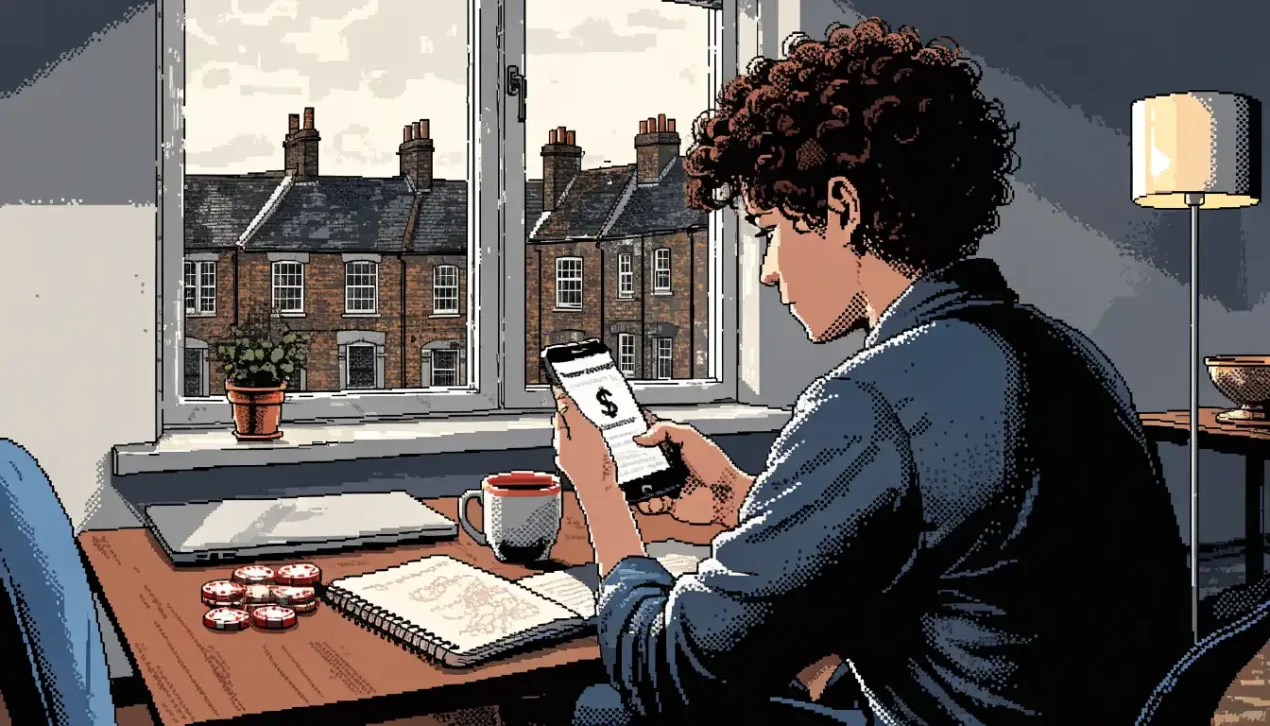
Open Banking and conventional bank transfers both link casino payments to bank accounts, but they work differently and may not offer the same features.
What “Direct Banking” Means at a UK Casino
“Direct banking” sounds like one neat button in a casino cashier. It isn’t. I use the phrase here as an umbrella for two related routes: Open Banking payments and conventional bank transfers. They both connect a casino payment to a bank account, but they are not the same service, and a site may offer one without offering the other.
That distinction matters when you are looking at online casinos that accept Open Banking. The label can describe a bank-linked payment service that asks you to approve a payment through your bank, or it can be used loosely alongside bank transfer options. The cashier’s wording is not enough to tell you exactly which route is available. You need to see the method the casino actually presents, then check what it supports for your account.
Open Banking and a bank transfer are not synonyms
Open Banking describes a way for a regulated service to connect with your bank, with your permission, and initiate or facilitate a payment. In a casino cashier, that may mean choosing a named payment provider and confirming the transaction through your bank’s own sign-in or approval process. The payment is bank-linked, but the cashier experience is arranged through the service involved.
A bank transfer is a broader term for moving money from one bank account to another. It may be set up through the casino’s cashier using bank details, or through a transfer option handled by a payment provider. The route can look different from one site to another. Calling both options “direct banking” is useful for a general discussion, but it should not make you assume they share the same provider, process, or conditions.
I learned that the awkward way: I treated a bank logo as if it told me the whole story. It didn’t. A familiar name or a bank-related label only tells you something about the route, not whether that particular casino will let you use it for the transaction you have in mind.
TRON TRX Casino Comparison for UK Players
What the umbrella term does—and does not—promise
When I refer to direct banking in this section, I mean payments that use Open Banking or a bank-transfer route rather than a card, an e-wallet, or a prepaid voucher. I do not mean that every casino offers both routes, that every bank is supported, or that a payment will work in the same way at every site.
“Instant” is another word worth keeping in its lane. Open Banking and bank transfers can make deposits available quickly, and some specialist casino reviews describe fast deposits and withdrawals through these routes at many sites. That is a report about the services reviewed, not a guarantee for every casino or account. A bank-linked deposit and a withdrawal are separate parts of the cashier’s setup; the label alone cannot tell you how either will be handled.
Nor does “direct” mean that the casino receives money without any service in between. A provider may connect the bank and the casino, and your bank may ask you to approve the payment. The important point is practical: identify the route shown in the cashier instead of relying on a broad category name.
Why account ownership still matters
A bank-linked route works best as a payment from your own account, using account details that match the casino profile. Keeping the account information and payment route under the same customer’s name reduces the chance that basic ownership checks will hold up a transaction. It is not a promise that no checks will happen, but it avoids creating a mismatch that could have been prevented.
That is a small check with a real purpose. I once focused on whether a method looked quick and barely looked at whose account it was linked to. The payment route was not the part I needed to worry about; the details around it were. Keep it in your own name.
DO
- Use account details that match your casino profile
- Keep the casino account and payment route under your own name
- Confirm the account currency before your first transaction
DON’T
- Use a bank account that is not in your own name
- Assume a bank logo tells the whole story about the payment route
- Rely on a broad category name instead of checking the cashier
So, when you see “Open Banking casinos” or a casino described as accepting direct banking, read the phrase as a starting point, not a complete payment specification. It may point to an Open Banking service, a bank transfer, or a cashier that offers one but not the other. The useful question is not whether a site uses the label. It is what exact method appears in your cashier and whether its terms fit the payment you want to make.
That is the terminology I’ll use throughout: direct banking covers Open Banking and bank-transfer routes, while the actual option depends on the casino’s cashier. Same broad family. Different route.
Using Open Banking at an Online Casino
When I use Open Banking at an online casino, I think of it as a bank-linked way to authorise a payment, not as a new kind of bank account or a promise that every site will offer the same service. The casino’s cashier presents a route connected to your bank; you select it, follow the authorisation steps and confirm the amount. What happens after that depends on the casino, the payment provider and the bank involved.
That distinction matters because the label can make the process sound more uniform than it is. One cashier may show an Open Banking option by name, while another may present a provider or bank-transfer route. Seeing a bank connection mentioned on a casino’s information page does not, by itself, tell you how the payment will be authorised, whether your bank is supported, or whether the route is available to your account. I check what the cashier actually offers before treating it as usable.
Casinos That Accept Dogecoin in the UK: What to Check
The practical appeal is that you authorise payment through a bank-linked process rather than entering card details or moving money through a separate wallet. You are still making a casino deposit, and the payment still needs to be accepted by the relevant services. It is not a way around the casino’s account checks, payment rules or financial-limit controls. For me, the useful question is not whether Open Banking sounds modern; it is whether the route works with my bank and the casino account I intend to use.
How it differs from other payment choices
A debit-card deposit is made using the card details and card-payment route. Debit cards are commonly accepted by UK casinos, but that does not make them the same as an Open Banking payment. A bank-linked route instead asks you to authorise access or a payment through the banking process it uses. The money may ultimately come from the same current account, but the payment mechanism is different.
An e-wallet adds another account between you and the casino. You fund or use the wallet, then select it as the casino payment method. PayPal, Skrill and Neteller are examples of wallet services, though a casino does not necessarily offer every one. I would not assume that a wallet can be used for both deposits and withdrawals just because it appears in a cashier, or that it will be treated the same as a direct bank-linked payment.
A prepaid voucher is different again: Paysafecard is deposit-only. It can be a way to pay without using a bank-linked authorisation at the point of casino deposit, but it does not serve the same role as a route connected to your bank account. That difference becomes relevant when you want a payment path that can also be used for returning funds. The method’s stated function matters more than the broad category it sits in.
Debit Card
Made using card details and a card-payment route, commonly accepted by UK casinos.
E-wallet
Adds an account between you and the casino, such as PayPal, Skrill, or Neteller.
Prepaid Voucher
Methods like Paysafecard, which are often deposit-only and do not connect directly to your bank.
These options are not interchangeable just because they all appear under “payments”. A card, a wallet, a voucher and an Open Banking route each have their own provider, account requirements and cashier availability. I have made the mistake of assuming that a familiar payment logo meant the whole transaction would work exactly as it did elsewhere. It didn’t. The casino’s own cashier is the point to check.
The account behind the payment
For a straightforward experience, I keep the casino account and the payment route tied to me. If the name on the casino profile differs from the name associated with the bank account or payment service, that mismatch can create avoidable questions. Using one named account consistently for deposits and withdrawals is often the cleanest route; it also makes it easier to understand which payment method was used.
I would not read that as a guarantee that a bank-linked deposit will be returned by the same route in every case. Casinos can apply closed-loop rules and may need to return funds to the original payment source. The available withdrawal choices depend on the operator’s process and the payment method, so it is worth understanding the connection between deposit and withdrawal before putting money in. I keep the account details consistent rather than trying to solve that later.
Currency deserves a check too. A specialist review may describe GBP as supported, but that is not a reason to assume your own casino account is set to pounds. Confirm the account currency before the first transaction. If the account and payment route use different currencies, conversion may enter the picture, making the amount debited or credited less straightforward than the figure displayed in the cashier.
What I check before authorising
I look at the exact method name shown in the casino cashier, whether my bank is offered, and which account the payment screen asks me to use. I also check that I am authorising a payment for the intended casino account and amount. If the route sends me through a provider’s page or my bank’s own approval flow, I read the confirmation rather than tapping through on autopilot.
Casinos That Accept Litecoin in the UK: What to Check
That sounds basic. It is basic. But when a payment is presented as “instant” or “one-click”, it is easy to focus on speed and skip the details that identify where the money is coming from. I want to know which route I have chosen and which account it is connected to, not just that a deposit button has appeared.
Open Banking can be a practical option when the casino offers a compatible bank-linked route and the account details line up. It is not automatically better than a card or wallet, and a payment label alone cannot tell you how the casino handles the rest of the transaction. Check the route in the cashier, use your own named account, and confirm the currency before you authorise anything.
The Bank-to-Casino Payment Route, Step by Step
A direct bank payment looks simple from the outside: choose a method, approve it through your bank and see the casino balance update. The part I used to overlook was the account trail behind those clicks. If the name or banking details do not line up with the casino account, a routine payment can raise questions that were avoidable.
Start with the account you will actually use
Before opening the cashier, make sure your casino account is registered in your own details and that the bank account you intend to use belongs to you. This sounds obvious, but I once rushed through registration and only noticed a mismatch after trying to pay. It did not prove anything was wrong; it just gave support another detail to check.
Use matching personal information wherever the forms ask for it. Your name should be consistent, and your address and other account details should be accurate rather than guessed or shortened differently across services. A payment route tied to the same customer as the casino account reduces the chance that basic ownership checks create friction.
Small details matter. If your bank record includes a middle name and the casino profile does not, do not assume the difference will be ignored. If you spot an error, correct the account record through the proper channel before sending money. Do not try to solve a mismatch by using someone else’s bank account.
Choose the route and follow its prompts
In the cashier, select the bank-linked option you intend to use and read the instructions on screen before continuing. A route may send you to your bank to approve access or confirm a payment; follow the steps shown rather than relying on what you remember from another casino. The labels and screens can differ.
Casinos That Accept Wirecard in the UK: What to Check
Check that you are authorising the transaction you meant to make and that the account shown is yours. If a bank approval page, payment reference or confirmation screen does not look right, stop and check with the casino or payment provider. I have learned not to treat a familiar logo as proof that every detail is correct.
Once you approve the payment, keep the confirmation until the casino balance reflects it. If it does not appear, avoid submitting the same payment again straight away. First check the transaction status with the bank and the casino, so you do not create a duplicate payment while trying to fix a delay.
Keep the payment trail consistent
For a straightforward route, use one named account consistently for deposits and withdrawals where the casino supports that arrangement. A clear link between the casino account and the payment source makes ownership easier to establish than switching between accounts without a reason. That is not a promise that every transaction will be processed without checks; it simply avoids adding an unnecessary question.
If you change banks or need to use another eligible route, check the casino’s instructions before making the next deposit. Keep records of the payment and any communication about the change. Do not assume a new source can automatically receive a withdrawal just because it can fund the account.
If the casino asks for information to confirm that the bank account is yours, respond through its secure process and provide only what it requests. Do not send banking credentials or approve a request you did not initiate. When something feels off, pause and contact the casino using the contact details in your account.
The route is not complicated. The useful habit is to keep the account details, payment source and transaction records pointing to the same person. Less untangling later.
Instant Deposits, Bonuses and the Small Print
An Open Banking deposit can appear in a casino balance almost immediately, but that is a possibility, not a promise attached to every bank-linked payment. A specialist review describes Open Banking and bank transfers as routes that can provide instant deposits at many sites. The wording matters: availability and timing depend on the casino and the payment route it offers. I would not treat “instant” as a feature you can assume from the method’s name.
Casinos That Accept Bitcoin in the UK: What to Check
That distinction matters when you are choosing a casino that accepts direct banking deposits. If the cashier shows an Open Banking option, check the payment screen and the operator’s terms for how it is processed. A bank transfer may follow a different path from an Open Banking payment, even when both involve your bank account. And a payment that looks quick on one occasion does not establish how the next one will behave. Banks and casino systems still have to process it.
The same caution applies to promotions. A fast deposit does not automatically qualify you for a welcome offer, a reload promotion or a no-deposit bonus. The offer’s terms decide that, and they can specify which payment methods count, whether a code is needed, and what you must do to claim it. Read those terms before depositing rather than after the balance has landed. I learned that the hard way: seeing money credited felt like the important step, but it did not answer whether the promotion applied.
Searches for an Open Banking casino no-deposit bonus can also blur two separate things. A no-deposit offer is not simply a bonus attached to an instant payment; its own conditions determine who can claim it and what is required. If a casino advertises one, check the eligibility wording and any restrictions before opening an account or making a payment. Don’t infer that a bank-linked cashier option makes an offer available.
Payment method can matter even when a promotion itself looks straightforward. A specialist review notes that PayPal may be excluded from bonus eligibility, despite its appeal for speed and convenience. That is a reason to read the casino’s specific promotion terms, not to assume the same rule applies everywhere. The terms for the offer you are considering are the part that counts.
Minimum deposits also sit beside the bonus small print. One specialist review reports minimums in the £10–£20 range, varying with the payment method. Treat that as a prompt to check the cashier, not as a guaranteed figure for every casino or Open Banking route. The amount required to deposit and the amount needed to qualify for an offer may not be the same, so check both before confirming.
Promotional terms can specify which payment methods qualify for bonuses; some services like PayPal may be excluded from certain offers.
I now separate three checks instead of letting the word “instant” do all the selling: whether the payment option is available, when the casino says the funds should show, and whether that exact method qualifies for the promotion. Then I read any claim conditions before I press confirm. It takes a moment. Less guesswork.
Comparing Direct-Banking Options Without Chasing “Best”
I stopped trusting rankings that call a site the “best” without showing what was compared. With direct-banking options, a headline can tell you little about whether a route is available to you, works for the transaction you want, or costs less once every charge is counted. I compare the details instead.
Start with availability. A casino may mention Open Banking or bank payments somewhere on its site, but that does not tell you whether the option appears in your cashier or is available for your account. Check the payment choices you can actually select before treating a casino as a match. A polished payment-method page is not the same thing as a usable route.
Then look at what “fast” means in the specific offer. An instant deposit describes money reaching the casino, not every part of using the account. Promotional language can make speed sound like a blanket promise; I read it as a claim about one stage of a transaction and look for the conditions attached. “Instant” is not a comparison by itself.
Compare the full cost
I used to look for a visible fee and assume that was the whole bill. It isn’t necessarily. Payment costs can come from the casino, payment provider, card issuer or bank, currency conversion, or the payment network. Which of those apply depends on the route and transaction.
Currency matters too. If your casino balance and payment account are not in the same currency, check how conversion is handled. A conversion spread can cost more than a stated flat charge, so a route with no obvious fee is not automatically the cheaper one. Compare the amount you intend to move, not an abstract “lowest fee” label.
Casinos That Accept Diners Club in the UK
There is no single payment method that is cheapest in every case. The useful comparison is the total cost for your actual amount, including any casino or provider charge, bank or issuer fee, exchange-rate spread, and network cost where relevant. If the cashier or provider does not make a cost clear, pause rather than filling the gap with a guess. Small print matters.
Match the route to your needs
I also check that the option fits the job I need it to do. A deposit route may not serve the same purpose as a withdrawal route, and a list of payment logos does not settle that question. Check the casino’s stated support for the transaction you plan to make; don’t infer it from a name or a general claim.
Consistency is worth weighing alongside price and speed. If one route looks marginally quicker but creates uncertainty about charges or account details, I would rather understand the straightforward option first. That is not a universal rule for choosing a payment method; it is a way to avoid letting one attractive feature distract from the rest.
For a fair comparison, I write down the same checks for each casino: is the route available in my cashier, what does it support, what charges or conversion costs might apply, and what does the operator actually promise about timing? Then I compare like with like. No podium required.
That approach is less exciting than a “best” list, but it gives you something usable: a choice based on the route and its cost, rather than a ranking whose criteria you cannot inspect. Short version: check the details.
Direct Banking in the UK Cashier
A cashier can make “direct banking” look like one neat button, but the label does not tell you what the route will actually do. I check the payment screen itself, not just a banner or a general methods page. For a UK direct banking casino, the useful details are whether the method is available on my account, whether it handles the transaction I want, and what currency the account uses.
Casinos That Accept Echecks in the UK: What to Check
Start by opening the cashier while signed in. Payment options can depend on the operator and the account, so a method mentioned elsewhere is not proof that you can use it. Read the route’s description and any deposit or withdrawal notes shown beside it. If you only see a bank-linked option on the deposit screen, do not assume it can also pay out.
Currency is easy to overlook. A specialist review reports that GBP is supported on the sites it covers, but that does not establish the setting for every account or cashier. Confirm the casino account currency before making your first payment. If your bank sends funds in a different currency, conversion may affect the amount credited or the cost of the transaction. Worth checking first.
I also look for the exact route name rather than treating every bank payment as interchangeable. A bank transfer and an Open Banking option may appear in the same cashier, yet the operator can present them as separate methods with different instructions. Choose the route you recognise, then check the confirmation screen before approving anything. If the details differ from what you expected, stop and ask support rather than guessing.
The cashier should also make the permitted transaction clear. Some methods are designed for deposits; others may support both deposits and withdrawals. A specialist review describes Open Banking and bank transfers as capable of providing instant deposits and fast withdrawals at many sites, but that is not a promise about every operator, account or transaction. Check the cashier’s own terms for the route you intend to use.
One more thing I check is whether the amount and currency shown by the casino match what I am authorising with my bank. Keep the confirmation for your records, especially if the route opens a bank approval screen. If the cashier does not explain whether the method supports your intended transaction, get a clear answer before sending money. That small pause has saved me from having to untangle a payment later.
Attention
Do not assume a method used for deposits can automatically be used for withdrawals; always check the cashier for compatibility.
Payment Methods: Deposits, Withdrawals and Compatibility
A payment method can look suitable in a cashier and still be the wrong fit for how you plan to move money out. I learned to check both directions before choosing: a deposit option does not automatically support withdrawals, and a method described as “instant” may refer only to money going in.
Bank transfers and Open Banking routes connect a casino payment to a bank account, but the cashier’s wording matters. Check whether the route is offered for deposits, withdrawals, or both, and whether the same route is available on your account. “Open Banking” is not a promise that every casino supports the same services or payout path.
Debit cards are another familiar option. UK casinos commonly accept Visa and Mastercard debit cards, but that does not settle whether your particular card product is eligible or whether it can receive a payout. Check the cashier and the casino’s withdrawal terms rather than assuming that deposit support means withdrawal support.
Other methods can have narrower roles. Paysafecard is a prepaid voucher for deposits only, so it is not a complete choice if you want the same method to handle a withdrawal. Some UKGC-licensed casinos also take Apple Pay for deposits; confirm separately whether the casino offers a suitable withdrawal route.
That distinction changed how I read payment pages. A row of logos is not a compatibility guide. For each option, look for clear deposit and withdrawal support, any conditions attached to your account, and whether the method can return funds to you. If it is deposit-only, decide in advance how payouts will work instead of discovering the gap later.
Keep the purpose in view: the useful method is not simply the one that gets money into the account. It is one whose deposit and withdrawal rules fit your needs, without relying on an assumption that two methods with similar labels behave alike. Check first. Then choose.
Bank Transfers: Limits, Timing and Fees
A bank transfer can look simple in the cashier, but the amount you can send and how quickly it arrives depend on more than the payment button. I check the casino’s displayed terms before confirming anything; limits may apply per transaction, across a day, or over a month, and can vary with the payment method and your account status. The figure shown for one route is not necessarily the figure available to another.
Casinos That Accept Boku in the UK: What to Know
That matters if you are planning a direct banking casino deposit around a particular amount. Don’t assume a transfer will go through just because your bank balance covers it. The cashier may impose its own ceiling, while the bank or payment provider may apply a separate restriction. Check the current limit at the point of payment, rather than relying on an old casino banking guide or a remembered figure.
Timing is variable too. Bank transfer delivery can be affected by the provider’s cut-off time, weekends and currency conversion. A payment sent outside the relevant processing window may not move as quickly as one initiated during it. A specialist review has also noted these factors, but the exact handling depends on the route and the casino. “Instant” is a description to verify, not a promise I’d budget around.
Fees are easy to overlook because they may come from different places. The casino, payment provider, bank or card issuer can each have charges, while an exchange-rate spread or network fee may affect the final cost. A transfer with no visible flat charge can still cost more after conversion. I compare the amount leaving my account with the amount credited, and check whether the account is set to GBP before sending funds.
Keep the calculation specific to the payment and amount you intend to use. There is no single cheapest route across every casino and bank. Check both the cashier’s terms and your bank’s charges before confirming.
Small print matters.
Why a Fast Deposit Does Not Guarantee a Fast Withdrawal
A deposit that appears in your casino balance straight away can set the wrong expectation: that a withdrawal will move just as quickly. They are separate parts of the process. With Open Banking or another direct banking route, the incoming payment may be quick, but the casino still has to approve a payout before it is sent.
That approval is part of the withdrawal time, not a detail to ignore. A specialist review notes that the casino’s internal checks can affect how long a payout takes, and that the account’s verification status matters too. First withdrawals may take longer while the operator completes KYC. I have learned not to read “instant” on the deposit side as a promise about money coming back out.
The bank-linked route does not bypass those checks. If the casino needs information or documents to confirm your account, the payout can remain pending while that is resolved. Once the casino releases it, the receiving bank or payment service may also affect when the funds appear. So “fast withdrawal” can describe one part of the journey, not the whole thing.
Before relying on a direct banking casino withdrawal, look at the cashier’s payout information and check whether your account is fully verified. If timing matters, ask support what stage a pending withdrawal has reached rather than assuming the bank is holding it. Keep the payment route and account details consistent, too; mismatched ownership information can create avoidable friction.
Quick in is not quick out.
Before You Choose a Casino That Accepts Direct Banking
Before opening an account, I’d check the cashier while signed in, not rely on a payment logo or an old review. A casino that accepts direct banking in general may not show the same route for every customer. Confirm that the method is available to you and that it suits the transaction you intend to make.
Then look at where withdrawals can go. UK anti-money-laundering rules generally mean a casino must return funds to the original payment source. That can make the account and payment route you use at the start matter later, even if another payout option looks simpler.
I’ve learned not to treat “instant” as the whole story. A bank-linked deposit route does not mean you can choose any destination when withdrawing. Returning funds to the original source is also a common anti-fraud control; if you ask for an alternative, expect the casino to request extra checks before agreeing.
The practical choice is the route you can use consistently, with account details that match your own. Read the cashier’s terms for your account, and keep a record of which route you used. If the withdrawal instructions are unclear, ask the casino before depositing rather than trying to sort it out when you want your money back.
There isn’t one best online casino for everyone just because it accepts instant banking. Availability and payout rules are more useful checks than a headline claiming a casino is “best”. Make sure you understand the route both ways. Then decide.
Why must withdrawals return to the deposit method?
Returning funds to the original payment source is a common anti-fraud and anti-money-laundering control. Using the same account and payment route in your name can also reduce avoidable ownership checks.
What is the fastest withdrawal method for UK casinos?
PayPal, Open Banking services and debit cards linked to fast payout systems are generally among the quickest options. Your actual wait also depends on the casino’s approval process and whether your account is verified.
Can I deposit in GBP?
Yes, GBP is supported at the sites covered. Confirm your account currency before your first transaction to avoid conversion.
What is the current minimum deposit?
The minimum deposit usually starts at £10–£20, depending on the payment method you choose.
Are Visa and Mastercard deposits definitely debit cards?
No. Visa and Mastercard are listed, but you need to check the cashier to confirm which card products are eligible; UK casinos commonly accept debit cards.
Can I use a credit card at 333 Casino in Great Britain?
No. Credit card gambling has been banned by the regulator since 14 April 2020, and the ban has not been relaxed.
Top online casinos in the UK
- NightLuckBonus: Welcome Pack + 805% Up To 6400€ + 280 FS · Payout speed: 1-3 business days
- SlotoSportBonus: 500% up to £ 10 200+ 777 FS · Payout speed: 1-3 business days
- WinBeastBonus: €5000 + 500 FS + €650 Freebet · Payout speed: 1-3 business days
- ChanzeBonus: Slots Welcome Bonus #1 200% up to €500 · Payout speed: 1-3 business days
- ZombillionBonus: Welcome Pack 250% up to £4000 + 200 FS · Payout speed: 1-3 business days
- Revery PlayBonus: 100% up to€1,000+ 100 FS · Payout speed: 1-3 business days
- EvoSpinBonus: 125% up to €2500 + 125 Free Spins · Payout speed: 1-3 business days
- BeOnBetBonus: 100% up to €500 + 100 FS · Payout speed: 1-3 business days
- x3betBonus: Welcome Pack 100% Up to £1.000 + 200 Free Spins · Payout speed: 1-3 business days
Related posts

Top Rated Online Casinos UK: What Ratings Mean

Progressive Slots Online UK: How Jackpots Work