
Curaçao Casino Licence in the UK: What It Means
 Available in GB
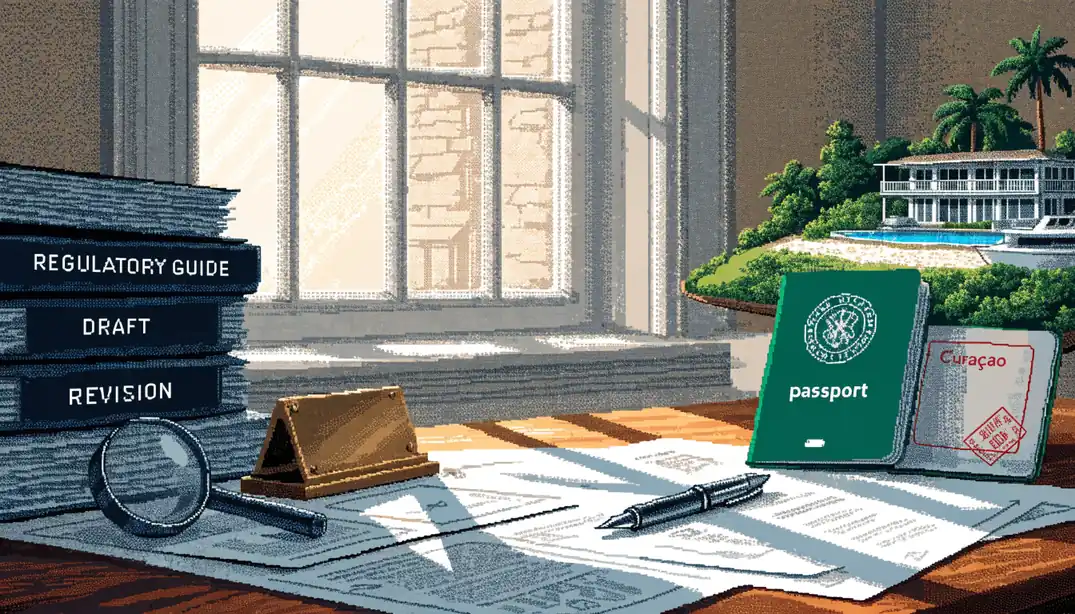
A Curaçao licence identifies an operator’s licensing jurisdiction, but does not show that it is authorised by the UK Gambling Commission.
What a Curaçao Casino Licence Actually Tells You
A Curaçao casino licence tells you that an operator claims to be licensed in Curaçao. It does not, by itself, tell you that the site is supervised by the UK Gambling Commission, or that the two regulators provide the same oversight. I used to treat a licence badge as a general stamp of safety. That was too simple.
The first distinction is between where a casino is licensed and which rules apply when it serves players in Great Britain. Non-UK-regulated casinos operate without oversight from the UK Gambling Commission. They may hold a licence from another jurisdiction, including Curaçao, Malta, Gibraltar or Anjouan. That foreign licence and a UKGC licence are not interchangeable credentials.
For operators serving customers in Great Britain, the relevant requirement is a UK Gambling Commission licence, regardless of where the operator is based. A Curaçao licence does not replace it. So when you see a site described as a Curaçao-licensed casino, read that as a claim about its licensing jurisdiction—not as evidence that it is authorised by the British regulator.
Casino Without a UK Licence: What It Means
That distinction matters because the word “licensed” can sound more complete than it is. It may suggest a familiar level of supervision, a shared set of standards or a clear route to help if something goes wrong. The label alone confirms none of those things about UK oversight. It tells you where the operator says its permission comes from; it does not settle what protections apply to a player in Britain.
What the label can—and cannot—signal
A Curaçao licence is a signal that the operator presents itself as regulated outside the UK system. It is not proof that the casino is UK-regulated, and it should not be read as a recommendation. Nor does the phrase “Curaçao casino” tell you, on its own, how the site runs its games, handles an account or treats a complaint. Those questions concern the operator and its practices, not just the jurisdiction printed on a badge.
I have clicked through plenty of polished pages where the licence badge was the most reassuring thing on screen. The trouble is that presentation and regulatory status are separate matters. A badge can be prominent and still leave the basic question unanswered: does this operator hold the licence required to serve Great Britain? If the answer is no, a foreign licence does not turn that answer into yes.
Gibraltar Casino Licence in the UK: What It Means
This is why searches for Curaçao online casinos or Curaçao casino sites in the UK can lead to a muddle. The wording may make a site sound tailored to British players, but a UK-facing description is not the same as UK Gambling Commission oversight. The place named in the licence and the market an operator serves are different parts of the picture.
It is also worth keeping the term “offshore” in proportion. It describes an operator that is outside the UK regulatory system; it does not tell you every detail of that operator’s licence or conduct. Some non-UK-regulated casinos are licensed by other jurisdictions, but that broad fact should not be stretched into a claim that every licence offers the same protections, or that every licensed site meets UK requirements. Different labels are not one common standard.
I would not use “best” or “top” as a substitute for that distinction. A ranking can make a foreign licence feel like a quality mark, but the licence’s location does not establish that a casino is suitable for a UK player. “New” does not help either: a new Curaçao casino is still not UKGC-regulated merely because it has recently appeared or displays an overseas licence claim.
The useful first step is narrower. Separate the licensing jurisdiction from British regulatory authorisation. If a site relies on a Curaçao licence, that tells you its stated regulatory home is not the UK Gambling Commission. It does not answer every question about the operator, and it does not make the operator subject to UKGC oversight.
I learned that distinction after assuming the word “licensed” meant I had the same protections wherever I played. It doesn’t. A Curaçao licence is a piece of information about the operator’s claimed regulatory base—not a British licence in disguise.
Curaçao-Licensed Casinos Online: The Difference Is in the Operator
When people say “Curaçao online casino”, they may mean a site that displays a Curaçao licence, a company that runs the site, or simply an online casino they believe is based there. Those are not interchangeable. The licence relates to the operator’s authorisation under a particular jurisdiction’s rules; the casino is the service you actually use: its account system, games, payment arrangements, support and treatment of customers.
A licence relates to the operator’s authorisation under a particular jurisdiction’s rules, while the casino is the service you actually use, including its games, payments, and support.
I’ve made the mistake of treating a badge as a shortcut. It looks like a quick answer to “who’s responsible here?” But a licence label on a homepage does not tell you, by itself, how a specific operator will handle a delayed withdrawal, a complaint, personal information or a request to stop gambling. For that, the operator’s own practices and terms matter.
One label, different businesses
A Curacao casino online is not a single kind of product. Sites may use similar wording about their licence while being run by separate companies, with different account rules, customer-service teams and internal procedures. The phrase “licensed” can sound like a quality mark; it is better understood as a claim about regulatory status, not a promise that every part of the service will work the same way.
That distinction matters because players do not interact with a licence in the abstract. They interact with the company operating the website. If an account is restricted or a document is requested, the operator’s terms and process shape what happens next. A Curaçao licence label alone cannot establish whether support will be responsive, how an individual case will be reviewed or what steps the operator may take.
The same is true of the phrase “online casino licence Curaçao”. It may identify the jurisdiction named in a site’s licensing statement, but it does not, on its own, describe the scope of that authorisation or show how closely the operator follows its own published policies. Those are separate questions. Keep them separate.
USA Casinos for UK Players: Licensing and Risks
What the label cannot tell you
A licence badge does not describe the safeguards built into a particular casino. Non-UK-regulated operators may apply less demanding standards for responsible gambling and data protection than operators licensed by the UK Gambling Commission. That is a difference in the wider framework, but it also leaves room for variation between individual businesses. A badge cannot tell you whether a site’s controls suit your needs or how carefully it handles information.
There is a practical cost to using a casino outside the UK regulatory system, too. You would not have access to the UK’s Financial Ombudsman Service for a dispute with that operator, and UK-mandated responsible-gambling tools would not be available through it. That does not tell you precisely how every Curaçao-licensed operator will respond; it tells you not to assume that UK protections follow you onto the site.
I used to read a polished licensing page as if it answered all of this. It didn’t. The wording might be accurate as far as it goes and still leave the player with basic unanswered questions about the actual service.
“Best” depends on more than a badge
A search for the best Curaçao online casino can make it sound as though there is one reliable ranking hidden behind the licence category. There isn’t a meaningful answer from the label alone. “Best” depends on what matters to you, while the operator’s licence claim does not establish the quality of its support, the clarity of its policies or the practical protections it offers.
DO
- Separate the licensing jurisdiction from British regulatory authorisation
- Research the specific operator behind the service
- Check the operator’s own terms and policies
DON’T
- Assume a foreign licence is interchangeable with a UKGC licence
- Treat a licence badge as a guarantee of service quality
- Use “best” or “top” rankings as a substitute for regulatory distinction
The same caution applies to a Curaçao online casino list. A list can put websites next to each other, but inclusion does not prove that their operators behave alike or that a shared licensing label means equal treatment. Nor does a badge turn an unfamiliar company into a known one. I would rather understand which business is behind the service than let a category name do that work for me.
A casino calling itself Curaçao-licensed is therefore a starting point for understanding the operator, not a verdict on it. “Licensed” is not the same as “safe for me”; those words answer different questions. The useful distinction is simple: the licence describes a regulatory claim, while the operator determines the day-to-day experience you have with the site. Don’t blur them.
Are Curaçao-Licensed Casinos Available to UK Players?
A British player may be able to open a Curaçao-licensed casino website, register and try to deposit. That practical access does not settle whether the operator is allowed to offer gambling to people in Great Britain. The legal duties mainly concern the business supplying the service, not the person clicking through to play.
The Gambling Act 2005 targets operators providing gambling services into the UK market. British citizens are not explicitly barred by UK law from using gambling services licensed in another country, and a player who uses an unlicensed site does not commit a criminal offence under that Act. That is a narrow point about player liability—not a statement that every site available online is authorised to serve people here.
Non-UKGC Licensed Casinos: What the Label Means
The operator has a separate obligation. A business offering remote gambling to customers in Great Britain must hold a licence from the UK Gambling Commission, even if it is based elsewhere. A Curaçao licence does not replace that requirement. If a site takes UK customers but lacks the necessary UK authorisation, the fact that it can be reached from a British device does not make its offer lawful.
That distinction is easy to blur when the site loads normally and accepts a registration. I have made that mistake myself: I treated “available” as if it meant “approved”. It doesn’t. A website’s willingness to accept a British visitor tells you about access, not whether the operator has met the rules for serving the market.
Access is not the same as permission
People searching for Curaçao casinos that accept UK players are often asking two different things at once: whether a site can be used from Britain, and whether the operator may lawfully offer it to them. The first can be true in practice while the second is not. A site may be visible, and its games may open, without having the UK licence required for a legal service to British customers.
The same distinction applies if the casino advertises real-money games or cryptocurrency payments. The payment method does not change the operator’s licensing obligation. Nor does a label such as “Curaçao eGaming” establish permission to serve Great Britain. These are separate questions, and the site’s own wording cannot merge them.
I would not describe this as a loophole for players. The legal position does not make an unlicensed operator a lawful choice, and it does not give the player the protections associated with a service that is properly authorised in the UK. It simply means the Act’s primary target is the operator supplying the service rather than the individual customer using it.
Attention Being able to register on a website does not mean the operator is legally authorised to serve customers in Great Britain.
There is also a geographic detail worth keeping straight: the Gambling Act 2005 applies to England, Wales and Scotland, not Northern Ireland. So “UK players” can conceal different legal contexts. For Great Britain, the licensing requirement for operators serving customers is clear: a foreign base does not remove it.
If you are assessing a Curaçao site from Britain, separate what the website lets you do from what the operator is entitled to do. Being able to visit or register is not proof of local authorisation. And the absence of criminal liability for a player should not be mistaken for a recommendation to play there. Availability is not approval.
The Licence Does Not Make a Casino UK-Regulated
A Curaçao licence and a UK Gambling Commission licence are not two versions of the same approval. They come from different authorities, and one does not stand in for the other. I used to see a licence badge and read it as a general sign that someone official had the casino covered. That was too generous an interpretation.
For a player in Great Britain, the relevant distinction is whether the operator holds a UK Gambling Commission licence. Operators serving customers in Great Britain need that licence regardless of where the company is based. A Curacao casino licence does not turn a non UK regulated casino into a UKGC-regulated one, and a badge on a website cannot change that.
This matters even if the site looks polished, accepts familiar payment methods or says it welcomes British customers. Those details do not establish UK regulatory oversight. Nor does a label such as “licensed” tell you that the UK Gambling Commission supervises the operator. It tells you only what the site claims about its licensing position; it is not a route into the UK regulatory system.
Online Casino Malta MGA Licence for UK Players
What changes when there is no UKGC licence?
The practical difference shows up when something goes wrong. If a non UK regulated casino changes how it handles a complaint or refuses to resolve a dispute, you should not assume you can take the case through the UK Gambling Commission’s complaint process. The operator is outside that regulator’s oversight, so the UKGC is not the player’s regulator for that casino.
You also forfeit access to the UK’s Financial Ombudsman Service and to mandatory responsible-gambling tools when you play at an offshore casino. That is a material loss, not a technicality buried in a licence description. A site may offer its own ways to raise concerns or manage play, but those should not be mistaken for UK protections.
“Protected” is one of those words that can do too much work. A regulator’s logo, a licence number or a statement about compliance does not make every protection available to a UKGC-regulated customer apply. I learned to separate the operator’s claim from the authority that would actually oversee it. Important difference.
Read the label narrowly
When you see a Curacao casino advertising its licence to UK players, read that as a claim about an offshore licensing arrangement—not proof of UK regulation. The same applies to Curaçao crypto casinos and Bitcoin casinos: using cryptocurrency does not alter which regulator, if any, oversees the operator in Great Britain.
That distinction is easy to blur because “licensed” sounds complete. It is not. The useful question is not simply whether a casino says it is licensed, but whether it has the UK Gambling Commission authorisation required for operators serving Great Britain. A foreign licence cannot answer that question on its own.
Important Distinction
A foreign licence describes a regulatory claim, while the operator determines your actual day-to-day experience and protections.
I would not treat a Curaçao badge as a substitute for UK oversight or assume UK complaint routes remain available. If you choose to use a site outside the UK system, understand that the regulator and protections you might expect from a UKGC-licensed casino are not there for you. No shortcut around that.
GamStop and Curaçao Casinos: What the Gap Means
GamStop is the UK Gambling Commission’s self-exclusion scheme. When you register, it is meant to block you from gambling accounts with participating operators. A casino outside that scheme is not covered by your GamStop registration. That is the gap: self-exclusion does not automatically reach every site you might be able to access.
So a Curaçao-branded casino described as “not on GamStop” is not offering an alternative version of GamStop. It simply sits outside the scheme. The label tells you about that connection, not whether the casino will recognise that you have chosen to stop gambling elsewhere.
I used to read a missing restriction as a kind of freedom. It was an easy mistake to make, especially when a site made signing up sound uncomplicated. But if you have self-excluded because gambling is causing harm, being able to open another account is not a benefit. It can undo the barrier you deliberately put in place.
That distinction matters whether you are looking at Curaçao casinos that accept UK players or any other non-UK-regulated casino. The country named on a licence does not bring the site into GamStop. Nor should “exempt from GamStop” be read as proof that an operator has assessed your situation or will prevent you from gambling. It means the scheme does not cover it.
Merkur Casino Online UK: Slots and Site Checks
What GamStop does not follow you to
GamStop is not a universal block on gambling websites. Its reach is limited to participating operators, so a site outside the scheme may remain accessible after you self-exclude. You should not assume that searching for a Curaçao casino for UK players will show sites that respond to GamStop in the same way as UK-licensed operators.
That can create a practical problem: the protection you expected may not apply at the point you need it. If your aim is to stop gambling, trying another site because it does not appear to check GamStop can weaken the boundary you set for yourself.
“Available” is not the same as safe. A Curaçao casino accepting UK players may be outside the UK’s self-exclusion system, and non-UK-regulated casinos can apply less demanding standards to responsible gambling and data protection than operators overseen by the UK Gambling Commission. A badge or a claim about access cannot tell you how well a particular operator will respond if you show signs of harm.
You also give up access to mandatory responsible-gambling tools available through UK-regulated operators when you gamble outside that system. If a problem develops, you cannot treat GamStop as a backstop for that account. The question “is a Curaçao casino safe?” has no answer in the phrase “not on GamStop”; the phrase identifies a gap, not a safety assessment.
If you have already self-excluded, take that decision seriously rather than treating a site outside the scheme as a loophole. Consider stepping away and speaking with someone you trust or a gambling-support service. No clever workaround.
GamStop limitations
GamStop is a UK Gambling Commission self-exclusion scheme that only applies to participating operators. A casino licensed in Curaçao operates outside this scheme, meaning your exclusion will not automatically prevent you from accessing their services.
Top online casinos in the UK
- NightLuckBonus: Welcome Pack + 805% Up To 6400€ + 280 FS · Payout speed: 1-3 business days
- SlotoSportBonus: 500% up to £ 10 200+ 777 FS · Payout speed: 1-3 business days
- WinBeastBonus: €5000 + 500 FS + €650 Freebet · Payout speed: 1-3 business days
- ChanzeBonus: Slots Welcome Bonus #1 200% up to €500 · Payout speed: 1-3 business days
- ZombillionBonus: Welcome Pack 250% up to £4000 + 200 FS · Payout speed: 1-3 business days
- Revery PlayBonus: 100% up to€1,000+ 100 FS · Payout speed: 1-3 business days
- EvoSpinBonus: 125% up to €2500 + 125 Free Spins · Payout speed: 1-3 business days
- BeOnBetBonus: 100% up to €500 + 100 FS · Payout speed: 1-3 business days
- x3betBonus: Welcome Pack 100% Up to £1.000 + 200 Free Spins · Payout speed: 1-3 business days
Outside GamStop Is Not a Safety Feature
The practical danger is easy to miss: a site being outside GamStop tells you what it does not connect to, not what it does to protect you. I used to read “more freedom” as a perk. In practice, it can mean fewer barriers at the exact moment you need one.
GamStop is the UK Gambling Commission’s self-exclusion scheme. A non-UK-regulated casino that is not part of it will not apply your GamStop exclusion. That means you should not assume signing up to GamStop will stop you opening or using an account there. The gap matters most if you excluded yourself because gambling had become difficult to control.
Fewer safeguards when you need them
UKGC-licensed operators must provide responsible-gambling tools. At a non-UK-regulated casino, you lose access to those mandatory protections. The site may offer its own limits or account controls, but you cannot treat them as a substitute for the UK requirements. Their availability and operation depend on the operator.
That difference can be more than a box in the account settings. A limit only helps if it is available, clear and works when you need it. If a tool is missing, hard to find, or handled differently from what you expect, you may have fewer ways to interrupt a losing run or prevent yourself from depositing again. “Player choice” sounds reassuring; it is less reassuring when the choice to stop is the one the site makes difficult.
I have been caught by the thought that I could just rely on willpower. I couldn’t always. If you have self-excluded or are worried about your gambling, do not use a site outside the scheme as a workaround. Step away from gambling instead, and contact a support service such as GamCare if you need help.
Non-UK Licence Casinos: What UK Players Should Know
Your information is part of the risk
Non-UK-regulated casinos may operate under less stringent responsible-gambling and data-protection rules than operators licensed by the UK Gambling Commission. That does not establish how any one casino handles your information, but it does mean you should not assume the same level of oversight or protection.
Before handing over personal details, consider what you are sharing and whether you are comfortable with the operator’s policies. If you later have a problem, you also do not have access to the UK’s Financial Ombudsman Service or the mandatory responsible-gambling tools that apply at UKGC-licensed operators. That leaves fewer formal protections to rely on.
A Curaçao label does not close this gap. Nor does “not on GamStop” mean safer, more private, or easier to control. It means the UK scheme is not there to enforce your exclusion. If that exclusion is important to you, that is enough reason to avoid the site. No clever workaround.
Why a Casino List Would Be Misleading Here
A list of Curaçao casinos can look useful at first: names in one column, a licence label beside each, perhaps a rating to make the choice feel settled. I’ve been tempted by that format myself. But a list is only as reliable as the checks behind it, and a licence label on a page does not tell you whether the operator is suitable for customers in Britain.
Operators serving customers in Great Britain need a UK Gambling Commission licence, whatever country they operate from. A Curaçao licence is not a substitute for that requirement. So a directory of sites carrying Curaçao branding would not, by itself, answer the practical question a British player needs answered: whether a particular operator is authorised to serve them here.
Checking the Operator
- Identify the legal company name behind the licence
- Verify the licence details in the terms and privacy policy
- Check for mandatory responsible-gambling tools
- Review the dispute and complaint clauses
Nor would a list establish what happens when something goes wrong. Players using offshore casinos lose access to the UK’s Financial Ombudsman Service and to mandatory responsible-gambling tools. Those are meaningful differences, not footnotes to a ranking. A high score or confident “trusted” badge cannot restore those protections.
The same problem applies to Curaçao casino reviews. A review may describe one operator at a particular point in time, but it cannot make a general licence label a guarantee about every site using it. Operators can differ, and what a review says about one does not establish the standing or practices of another. I’ve learned to treat neat tables with a bit of suspicion. They make uncertainty look tidy.
That is why I’m not naming or ranking casinos here. Doing so would imply that each entry had been checked against current, operator-specific information and assessed for British players. A list built around a shared licensing label would blur the very distinction that matters: the licence is one thing; the business taking your deposit is another.
If you are comparing a site, focus on the specific operator rather than treating a Curaçao casino list as a stamp of approval. Don’t assume that a “licensed” label means UK authorisation, or that a review can promise how a future complaint will be handled. Keep your expectations modest. Badges are easy. Recourse is harder.
How to Check the Licence Behind the Badge
A Curaçao badge on a casino page is a claim to examine, not proof that the site is authorised to serve you in Britain. I used to see a regulator’s logo and take it as reassurance. That shortcut tells you very little about which company runs the site or what protection you can actually call on.
Jackpot Mobile Casino UK: Games, Rules and Payments
Start with the wording around the badge. Look for the operator’s legal company name and the licence details the site says apply to it. Then compare those details with the information the operator provides elsewhere, including its terms and privacy policy. If the names do not match, or the claim is too vague to identify the company, treat that as unresolved—not as a minor bit of website housekeeping.
A search for how to check a Curaçao casino licence can easily blur two separate questions: whether an operator claims a foreign licence, and whether it has permission to serve customers in Great Britain. They are not the same. Operators serving Great Britain need a UK Gambling Commission licence, whatever country they are based in. A non-UK-regulated casino operates without UKGC oversight; a foreign licence badge does not change that.
So don’t let “licensed” do all the work. Check whether the casino names the contracting company, whether its terms identify the same company, and whether the licence claim is specific enough to assess. If the site leaves those points unclear, you have no solid basis for treating the badge as verified.
Also read the complaints and dispute clauses before you register. A foreign licence claim does not give you access to UK complaint routes. Players at offshore casinos do not have the UK’s Financial Ombudsman Service or the mandatory responsible-gambling tools that apply to UK-regulated operators. That difference matters if the operator changes its terms or a dispute arises.
Does a Curaçao licence provide UK protections?
No, it does not provide access to the UK Gambling Commission’s oversight, the UK’s Financial Ombudsman Service, or mandatory UK responsible-gambling tools.
Can I use GamStop with Curaçao casinos?
Not automatically. A Curaçao-licensed casino sits outside the GamStop scheme, so your self-exclusion may not be recognised by the operator.
Are player funds safe in offshore casinos?
Not necessarily. For example, in some jurisdictions like Anjouan, there is no requirement to keep player funds segregated from business funds, meaning you may be an unsecured creditor if the operator fails.
My rule now is simple: separate the licence claim from the protections you would have in Britain, and don’t assume one supplies the other. If you cannot establish who holds the account relationship, pause. A logo is not a safeguard.
Bonuses, Deposits and Withdrawals: Read the Terms First
A welcome offer can look generous until you read what has to happen before you can withdraw. Offshore bonuses may carry wagering requirements of 35x or more, according to specialist reviews; the exact condition depends on the offer. Check whether wagering applies to the bonus, your deposit, or both, and which games count. A no-deposit offer deserves the same scrutiny: “free” can still come with conditions that make the winnings difficult to cash out.
I’ve learned not to treat the banner as the deal. The rules are.
Before accepting anything, look for a deadline, maximum bet while wagering, excluded games and any cap on winnings. If the terms are unclear or change after you claim an offer, that can leave you arguing over money rather than enjoying a bonus. Skip it if you cannot tell what you must do to withdraw.
Payment methods need their own check. A casino may accept a deposit method without allowing withdrawals back through it, so read the cashier rules before paying in. Also check whether the operator sets a minimum cash-out, asks for identity documents, or applies limits to the amount you can withdraw.
A specialist review has reported that some non-UK-regulated casinos set daily, weekly or monthly withdrawal caps, which can mean receiving a larger win in instalments. Treat that as a possibility to verify in the operator’s current terms, not a standard rule for every casino. A cap can make a headline win less useful than it first sounds.
Withdrawal estimates are not consistent: one account says payouts can take from 24 hours to five business days depending on the method, while another warns they can stretch to several weeks. There is no single timeline to rely on. Check the stated processing time and what happens if extra checks are requested.
Anjouan Casino Licence in the UK: What It Means
The same caution applies when browsing for the best slots at Curaçao casinos. A game title or bonus label tells you little about the cash-out conditions. Read those first. Then decide whether the offer is worth touching.
What an Offshore Gaming Licence Does—and Does Not—Guarantee
A licence can show that a casino sits within a regulator’s framework. It is not a promise that every player dispute will be independently reviewed, or that your balance is protected if the operator collapses. I learned to separate those ideas the expensive way.
The distinction matters with an Anjouan casino licence. The Anjouan authority does not handle, mediate or decide complaints between players and casinos. If the operator rejects your explanation of a disputed result or account decision, the licence itself does not give you a comparable independent route to have that dispute resolved.
That is a real gap. A regulator may set rules for operators, but that does not automatically mean it will act as your personal referee. Keep records of deposits, account messages and the operator’s terms, but understand that documentation cannot create a complaint service that the licensing system does not provide.
Player funds are another separate issue. Anjouan-licensed casinos are not required to keep player money segregated from business funds. If an operator fails, players are unsecured creditors, rather than having a guaranteed ring-fenced balance set aside for them. In practical terms, you may have a claim, but that does not mean the money will be available or returned.
A Curaçao gaming licence should not be read as a universal guarantee either: the protection depends on the particular regulator and rules behind the claim. The label alone cannot tell you how a dispute will be handled or what happens to your balance if the business stops operating.
I used to treat a licence badge as a safety net. It isn’t one. Before depositing, think about whether you could accept losing access to the balance as well as being unable to get an independent decision on a complaint. That is the part the badge does not answer.
Are non-UK-regulated casinos legal for UK players to use?
Yes, UK law does not explicitly prohibit you from using gambling services licensed in another country, and players do not commit a criminal offence by gambling on an unlicensed site. However, operators serving customers in Great Britain need a UK Gambling Commission licence, and a foreign licence does not provide UKGC oversight.
Can I complain to the Anjouan regulator if a casino won’t pay me?
No. The Anjouan authority does not handle or decide player complaints; the casino must respond to complaints within 30 calendar days, but Anjouan does not provide an independent dispute-resolution route comparable to UKGC-approved ADR.
Are gaming sites not on GamStop permitted for UK players?
Not being on GamStop means the site is outside the UK Gambling Commission’s self-exclusion scheme; it does not by itself make the site authorised to serve Great Britain. Operators serving customers there require a UKGC licence.
Is it legal for a UK player to gamble at an Anjouan-licensed casino?
UK law does not explicitly prohibit you from using gambling services licensed in another country, and players do not commit a criminal offence by gambling on an unlicensed site. An Anjouan licence does not authorise the casino to operate in the United Kingdom.
Can UK players legally play at casinos licensed in Anjouan?
UK law does not explicitly prohibit you from using gambling services licensed in another country, and players do not commit a criminal offence by gambling on an unlicensed site. An Anjouan licence does not authorise the casino to operate in the United Kingdom.
What happens if I have a dispute with an Anjouan-licensed casino as a UK player?
The casino must respond to your complaint within 30 calendar days, but the Anjouan authority does not mediate or decide player disputes. Anjouan-licensed casinos are not required to offer independent dispute resolution comparable to UKGC-approved ADR.
Why do some online casinos choose an Anjouan licence over a UKGC or Malta licence?
An Anjouan licence does not provide UK authorisation, and its framework does not require RNG testing, audits or segregated player funds. The available information does not establish why individual casinos choose it over UKGC or Malta licensing.
Related posts

Top Rated Online Casinos UK: What Ratings Mean

Progressive Slots Online UK: How Jackpots Work