
No Minimum Deposit Casino UK: What £1 Gets You
 Available in GB
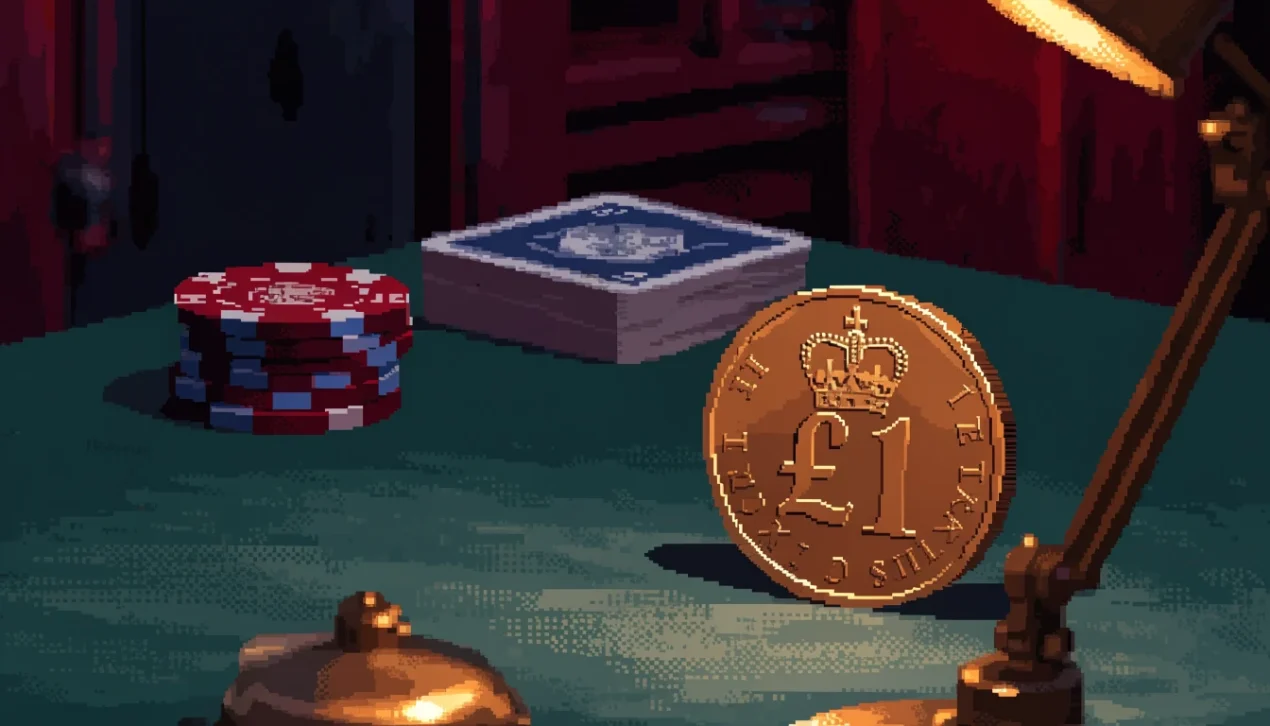
A low cashier minimum does not guarantee a bonus or make every payment method available at that amount.
What a £1 Minimum Deposit Actually Gets You
The phrase “no minimum deposit” sounds as if you can open an account and start playing without putting anything in. In practice, it often means something narrower: the casino lets you fund your balance with a very small amount. Some UK casinos accept a £1 deposit, but that does not make the account free to use or guarantee that every offer and cashier option will work at that level.
I used to read the headline and assume the £1 would do everything: get the account going, trigger the welcome deal and leave me free to choose how to pay. That was optimistic. A deposit is first and foremost money added to your casino balance. The cashier minimum tells you the smallest amount the operator will accept for that transaction; it does not, by itself, tell you what promotions you qualify for.
What happens to the pound
Once a deposit is accepted, it appears as funds in your account balance. It is not automatically a bonus, and the casino may not attach any promotional benefit to it. You can think of the cashier minimum and the offer’s qualifying deposit as separate rules, even when the site presents them together on one page.
That distinction matters before you press the deposit button. A welcome offer may have its own minimum qualifying amount, and a £1 payment can fall short even when the cashier accepts it. A specialist review reported welcome-offer qualifying deposits in the £5–£10 range; that is a snapshot, not a promise about every operator or a rule that will stay unchanged. Read the offer terms for the casino you are considering.
If the terms require a higher qualifying deposit, putting in £1 does not normally make the offer partially active. You may simply have your deposited money in the account, with no welcome bonus attached. “Welcome bonus” can sound like an automatic extra; it is really a promotion with conditions.
A low cashier minimum is not a blanket promise
A casino advertising a £1 minimum deposit is making a claim about the amount it accepts under particular conditions. It is not necessarily saying that every payment method supports that amount, that all promotions are available, or that every part of the account works on the same basis.
Same-Day Payout Casinos in the UK: How Timing Works
I have been caught by that gap: I saw a small figure on a review page, then went into the cashier and found the detail depended on the route I selected. That does not make a low minimum meaningless. It means the useful question is not only “Can I deposit £1?” but “What will this £1 actually do on this account?”
A specialist review identified six UK Gambling Commission-licensed casinos as accepting a genuine £1 minimum at the time it checked. Treat that as a dated finding, not a current shortlist or a market-wide count. Cashier terms can change, and the operator’s own payment screen and bonus rules are what matter when you sign up.
There can also be restrictions at the lowest deposit level. A specialist review noted that some UK casinos exclude £1 payments from welcome offers, restrict certain payment routes at that amount, or set withdrawal rules that make a small deposit different from a small cash-out. Those are separate conditions, so check the relevant terms rather than assuming that one low figure governs the whole account.
Check before funding
Before depositing, I now look at the cashier minimum and the promotion terms separately. If you do not want a bonus, check whether the site lets you decline it or whether a promotion is automatically applied. If you do want one, confirm the qualifying deposit and any other conditions before paying; do not infer eligibility from the cashier accepting your money.
Also take a moment to set a financial limit before your first deposit. That is a sensible step even when the amount is small: once money is in the account, it is easier to lose track of what you meant to spend. Keep the decision simple. Deposit only what you have decided in advance you can afford to lose.
The practical meaning of a £1 minimum is therefore modest but clear: at an operator that accepts it, you may be able to put £1 into your balance. Whether that amount qualifies for a promotion or is available through your chosen route depends on the operator’s specific terms. Small entry point. Separate rules.
A specialist review identified six UK Gambling Commission-licensed casinos as accepting a genuine £1 minimum at the time it checked.
Top online casinos in the UK
- NightLuckBonus: Welcome Pack + 805% Up To 6400€ + 280 FS · Payout speed: 1-3 business days
- SlotoSportBonus: 500% up to £ 10 200+ 777 FS · Payout speed: 1-3 business days
- WinBeastBonus: €5000 + 500 FS + €650 Freebet · Payout speed: 1-3 business days
- ChanzeBonus: Slots Welcome Bonus #1 200% up to €500 · Payout speed: 1-3 business days
- ZombillionBonus: Welcome Pack 250% up to £4000 + 200 FS · Payout speed: 1-3 business days
- Revery PlayBonus: 100% up to€1,000+ 100 FS · Payout speed: 1-3 business days
- EvoSpinBonus: 125% up to €2500 + 125 Free Spins · Payout speed: 1-3 business days
- BeOnBetBonus: 100% up to €500 + 100 FS · Payout speed: 1-3 business days
- x3betBonus: Welcome Pack 100% Up to £1.000 + 200 Free Spins · Payout speed: 1-3 business days
Bitcoin Casinos: Check the Deposit Route Before You Pay
A Bitcoin casino can sound like the neat answer when you want to start with a tiny amount: send a little cryptocurrency, avoid a conventional cashier, and get straight to the games. I used to treat the payment label as the whole story. It isn’t. The casino’s cashier minimum and the payment route a UK player can actually use are separate questions.
For a UK-facing casino, don’t assume that a Bitcoin logo or a page mentioning crypto means you can make a compliant gambling deposit that way. The UK’s rules on funding matter more than the wording in a payment menu. The Gambling Commission’s 2020 ban on credit-card gambling means deposits must come from a debit card, an e-wallet funded by debit, or a bank account. Bitcoin is not one of those routes.
That distinction is easy to miss when a site advertises itself as a “no minimum deposit” Bitcoin casino. The phrase may describe the operator’s headline offer, an account feature, or the smallest amount accepted through a particular cashier route. It does not establish that Bitcoin is available to a UK customer, or that the casino’s payment terms permit a small deposit through every method.
Separate the cashier minimum from the payment method
The cashier minimum is the lowest amount the casino says it will accept for a deposit. The route is how that money reaches the account. Even if a casino displays a low minimum, the option you plan to use may have its own rules—or may not be available to you at all.
£2 Minimum Deposit Casino UK: What to Check
That matters especially with cryptocurrency. A site can describe itself as a Bitcoin casino while its UK-facing payment options differ from the ones shown in general marketing. A payment route may also depend on the account’s country settings. Don’t take a brand label as proof that the cashier will accept Bitcoin from a UK account.
I’ve made the opposite mistake with payment pages: I saw a method listed somewhere on the site and assumed it would be waiting for me at checkout. It’s worth opening the cashier while signed in and checking the available methods for your account before you plan around one. If Bitcoin is absent, a promise elsewhere on the site doesn’t make it usable.
What a UK player can use
For gambling deposits in the UK, the permitted funding routes in this context are debit cards, e-wallets funded by debit, and bank accounts. A credit card is not an acceptable workaround. Nor does sending a credit-card-funded payment through a wallet or another intermediary make it suitable for gambling.
So if you are looking for a casino with no minimum deposit in the UK and hoping to pay with Bitcoin, check both parts rather than joining them into one assumption. First, establish which funding methods the casino makes available to UK customers. Then read the cashier terms for the minimum that applies to the method you intend to use. If the site only supports the permitted routes above, Bitcoin is not your deposit option there.
This doesn’t mean every operator offers every permitted method. It means you should make your decision using the actual route shown for your account, not a general claim about crypto casinos. A method that works in another country, or appears in an old review, may not match the UK cashier.
DO
- Check the cashier for available methods for your account
- Verify the specific minimum for your chosen route
DON’T
- Assume Bitcoin is available to UK customers based on branding
- Assume a general site claim applies to your specific account
Don’t confuse “no minimum” with “Bitcoin accepted”
“No minimum” is a phrase that can blur several different things. It might refer to how much you can deposit, whether a promotion requires an initial payment, or a particular payment provider’s threshold. None of those meanings proves that a UK player can fund the account with Bitcoin.
Before depositing, look for the casino’s own payment terms and check that the stated method is offered to UK customers. Confirm the minimum shown for that route and make sure the source of funds is a debit card, a debit-funded e-wallet, or a bank account. If the site’s Bitcoin wording leaves that unclear, don’t improvise with a different funding path.
I’d also set a spending limit before making a first deposit. That’s a better starting point than chasing a headline about a tiny payment or trying to force a preferred method through a cashier that doesn’t offer it. Small print first. Then decide.
The practical answer is plain: a Bitcoin casino may use crypto in its branding, but that alone does not verify a Bitcoin deposit route for someone gambling from the UK. Treat the cashier minimum and the payment method as separate checks, and use only an eligible funding route.
Real-Money Play on a Small Balance
A small balance changes the feel of real-money play. You notice each stake because there is less room to absorb a losing run, and a few quick decisions can use up the money sooner than you expected. I’ve made the mistake of treating a small deposit as permission to keep going until the account hit zero. It wasn’t a plan; it was just a way to lose track.
£3 Minimum Deposit Casinos in the UK: What to Know
Before you deposit, decide what you are comfortable spending and set that amount as your limit. UK-licensed operators must prompt new customers to set a financial limit before their first deposit, and they must provide account-level controls for managing it. Use those controls rather than relying on a promise to yourself that you can always stop later. A limit is not a target. If you reach it, stop.
What a small balance can cover
Many slots accept stakes from £0.10 to £0.20 per spin. That gives you a way to choose a stake that does not swallow the balance in a handful of rounds, but it cannot make the result predictable. A run of losing spins can still leave you with little to play; a win can change the balance, but it does not turn the next spin into a safer one.
Think in terms of the cost of each decision, not how long a balance might last. The same stake can feel modest when you first open a game and suddenly feel expensive after several losses. I find it helps to settle on a stake before playing and avoid raising it just to chase back money already gone. That urge is familiar. It is also where a small session can stop being small.
The balance shown in your account is money available to play, not a measure of what you can afford to lose. Keep those ideas separate. If losing the amount would affect bills or other essentials, do not deposit it. Real-money casino play is gambling, and there is no stake size that removes the chance of losing.
Before you play
- Decide on a comfortable spending amount
- Set that amount as a financial limit
- Confirm the stake is compatible with your limit
Make the limit practical
A useful limit is one you can follow without doing mental arithmetic mid-session. Set it before the deposit, then leave it alone while you play. If you have to keep adjusting it to make room for another round, that is a sign to take a break rather than negotiate with yourself.
I used to think a small deposit needed no planning because the amount was small. That reasoning did not survive a session where I kept topping up after the first balance ran out. A limit only works if it covers the whole amount you are prepared to spend, including any later deposits. Decide that boundary in advance and do not treat a fresh deposit as a reset.
It can also help to decide when you will stop for the session, whether you are ahead or behind. A win is not a reason to raise the stake automatically, and a loss is not a debt the next spin owes you. Keep the game separate from the rest of your evening: if you are tired, distracted or already annoyed, stepping away is the better call.
Keep play on the right side of the line
You must be at least 18 to gamble online in the UK, and real-money play should be at a UK-licensed casino. Age and account checks are part of the operator’s responsibilities; they do not make gambling risk-free. If setting a limit feels difficult or you find yourself repeatedly going past it, pause rather than depositing again.
The point of a small balance is not to stretch it into a guaranteed long session. It is simply the amount you have chosen to put at risk. Keep the stake compatible with your limit, watch the balance honestly and stop when you said you would.
£4 Minimum Deposit Casinos in the UK: What to Check
Small stakes. Clear boundary.
Low Deposit, No Deposit Bonus: Know Which You’re Getting
A low deposit and a no-deposit bonus are not the same thing. A small deposit is money you choose to put into your casino balance. A no-deposit promotion is an offer that may give you spins or bonus funds without requiring a deposit first. The label can sound generous, but it does not tell you whether you can keep or withdraw any winnings.
I once saw “free” and stopped reading. That was the mistake. Before opting in, check whether the offer is available to UK players, whether you must register or verify your account, and what conditions apply to the bonus and any winnings. A promotional banner is not the terms.
A small deposit may not qualify
A casino can accept a low deposit while setting a higher qualifying amount for its welcome offer. In that case, the money still goes into your balance, but the promotion does not activate. Some bonuses also require you to opt in before depositing. Read the offer terms first, rather than assuming that every deposit triggers it.
That distinction matters when comparing online casino sites with no minimum deposit. The phrase might refer to a low cashier minimum, a no-deposit offer, or games advertised with free spins. Those are separate things. “Best” is not much use unless the promotion’s eligibility and restrictions suit what you actually want.
Free spins connected to a £1 deposit are described in specialist reviews with offers ranging from 10 to 100 spins. Treat that as a snapshot of offers covered by those reviews, not a promise that a casino will provide that amount now. Check the operator’s current terms.
Attention Always read the current terms; promotions and wagering requirements are subject to change.
Read the wagering condition
A bonus may come with a wagering requirement: you must place bets totalling a specified multiple of the bonus or winnings before the related funds can be withdrawn. Specialist reviews have reported requirements between 30x and 65x for bonus value, and between 30x and 65x of winnings from free spins. These are reported terms, not a safe assumption about a current offer.
There is also an important rule change for 2026. Since 19 January 2026, the UK Gambling Commission has capped wagering requirements on bonus funds at 10x. If an offer presented to you appears to demand more, do not treat the headline as the final word: read the current terms and raise the discrepancy with the operator before accepting it.
Check what the requirement applies to. A promotion may calculate wagering on the bonus itself or on winnings from spins, and those are not interchangeable. Look for eligible games, any stated contribution limits, and the rules for withdrawing funds once the condition is met. If the terms are unclear, skip the offer. There is no prize for untangling small print after you have opted in.
The same caution applies to online slots or casino games promoted as available without a deposit. A game being playable for free does not necessarily mean its winnings are withdrawable, or that it is part of a no-deposit promotion. I separate free-play access from a cashable offer now. Less exciting. Much clearer.
£20 Minimum Deposit Casinos in the UK: What to Know
The £1, £5 and £10 Deposit Tiers
The cashier minimum and the bonus qualifying minimum are two separate figures. I learned to check both before deciding whether a small deposit was worth making. A site can accept your money at one level while setting a higher threshold for its welcome offer. “Low minimum” sounds like a neat deal; the terms are where the distinction appears.
£1: accepted, but not a guarantee
A specialist casino review recorded six UK Gambling Commission-licensed casinos with a genuine £1 cashier minimum. That is a snapshot, not a promise that the same operators still accept that amount today. If you are looking at a £1 option, check the current cashier and the operator’s terms rather than relying on an old list.
Even where £1 is accepted, it may not qualify for a promotion. A specialist review found that some bonuses require a qualifying deposit of £10, including at operators whose cashier accepts £5. So the amount that opens the door to an account can be different from the amount that triggers an offer. Read the promotion’s qualifying-deposit wording before opting in.
£5: a middle tier, not a bonus shortcut
A £5 cashier minimum sits between the £1 and £10 levels, but it does not settle whether you qualify for a welcome deal. If that deal sets its qualifying deposit at £10, depositing £5 will not meet the stated threshold, even though the payment goes through.
I used to treat the smallest accepted amount as if it were the price of the whole offer. It isn’t. The cashier sets what you can deposit; the promotion terms set what counts toward the bonus. Two different gates.
£1 Tier
Accepted by some operators, but may not qualify for promotions.
£5 Tier
A middle tier that may not meet higher bonus qualifying thresholds.
£10 Tier
A common threshold for direct-banking deposits.
£10: a common direct-banking threshold
A specialist review described £10 as the typical minimum for UK casino deposits made through direct banking, with some operators setting the threshold at £5 or £20 instead. Treat that as a guide to the range reported, not a fixed rule for every casino. The operator’s cashier is the place to confirm its current minimum.
This tier can also match a bonus’s qualifying deposit, but don’t assume that from the amount alone. Check whether the offer is available to you, whether you need to opt in, and whether the terms specify a minimum deposit. The amount accepted by the cashier and the amount required by a promotion may be identical—or they may not be.
A quick comparison helps:
| Cashier minimum | What to verify |
|---|---|
| £1 | Whether the operator still accepts it and whether the promotion excludes it |
| £5 | Whether the bonus requires a higher qualifying deposit |
| £10 | Whether the promotion’s eligibility and opt-in conditions are met |
For a UK no-minimum-deposit casino search, the practical question is not just how little you can put in. Check what that amount actually qualifies you to receive. I now read the cashier and offer terms side by side before depositing. No guesswork.
A Low Deposit Doesn’t Guarantee a Low Withdrawal Minimum
A small cashier minimum tells you what you can pay in. It says nothing, by itself, about how little you can take out. I learned that the irritating way: seeing a low entry point and assuming the exit would be just as flexible. Those are separate rules.
A specialist review reports minimum withdrawal thresholds of £10 to £20 at many UK casinos. Treat that as a reported range, not a rule for every operator; the cashier and withdrawal terms are what matter for the account you’re using. If your balance is below the stated threshold, you may have to keep playing until it reaches the minimum, or wait until it does. Neither is a reason to stake money you had planned to keep.
There are lower figures in some payment-specific reports. A specialist review puts minimum withdrawals at £1 to £5 for certain debit-card and e-wallet routes. That doesn’t mean every casino, or every account using those methods, will let you cash out at those amounts. The operator’s own withdrawal policy can set a different threshold, and it may depend on the route you choose.
Casinos That Accept Instadebit in the UK
The practical check is simple, though I used to skip it: before depositing, find the withdrawal minimum and see whether it applies to your chosen method. Also check whether the cashier requires you to withdraw through a particular route. A low minimum deposit casino can still have a higher cash-out floor. Read both sides.
“Fast withdrawals” is another phrase I’d treat carefully. A low minimum says nothing about processing speed, and an instant withdrawal claim doesn’t tell you whether your balance is eligible to withdraw. First check the minimum amount, then the operator’s stated processing conditions; don’t confuse a low threshold with money arriving immediately.
If a promotion is involved, look separately at its withdrawal and wagering terms. A balance showing in your account is not automatically ready to cash out. For a no-deposit bonus, “no minimum withdrawable” can be misleading if conditions still apply before winnings become withdrawable. I’d check what must happen before requesting a withdrawal, rather than relying on the headline.
Before you fund an account, make sure the withdrawal rules fit the amount you would actually want to take out. If the minimum is higher than your likely balance, that matters more than the attractive deposit figure. Small print, big difference.
Attention A low deposit does not guarantee a low withdrawal minimum.
Cards, E-Wallets and Phone Billing: What Can Take £1?
When I’m checking whether a £1 deposit will go through, I look at the cashier’s payment-specific minimum, not just the headline minimum deposit. A casino may accept Visa or Mastercard debit cards for small deposits, but that does not mean every route shown in its cashier will take the same amount. The cashier is the part that matters.
Debit cards are widely accepted at UK casinos and can support low minimum deposits. E-wallets may also handle a small transaction, but availability and limits depend on both the casino and the wallet. PayPal is one option people look for, but there is no universal PayPal minimum across casinos. Check the operator’s cashier and the terms for that payment route before sending money.
Phone billing is different. Boku and Payforit are examples of mobile billing methods associated with the £1 deposit tier, but that tier is rare, and a specific casino may not offer either service. Where it is available, the payment is charged through your mobile account rather than taken directly from a debit card. Check the amount shown in the cashier before confirming. Small print matters.
Online Casinos That Accept SMS Deposits: How It Works
Fees can make a tiny deposit poor value. A specialist review reports that some payment providers charge flat transaction fees of £1 to £3. That is enough to absorb a £1 deposit entirely, so check whether a fee applies and who charges it: the casino, payment provider or mobile operator. Don’t assume that a small deposit means a small cost.
A card, e-wallet or phone-billing logo is not proof that the route can take £1. Minimums can differ by method, and the operator may impose a restriction at the lowest amount. I’ve learnt to select the method first, enter the amount, then read the confirmation screen before approving anything. If the cashier rejects the amount or changes it, stop and check the displayed terms rather than trying another route blindly.
For any UK-licensed casino, deposits must use permitted funding: debit cards, e-wallets funded by debit, or bank accounts. Credit cards cannot be used for gambling, including through a payment service that routes credit-card funds into a wallet. Set a financial limit before your first deposit, however small it is. A pound still counts as money.
Slots on a Small Balance: Stakes, Spin Rules and Bonus Play
A small balance can stretch across more spins when you pick a slot with a low stake, but it can still disappear quickly. Many slots let you bet between £0.10 and £0.20 per spin. I used to treat that as a reason to keep pressing spin; it is not. A run of losing results can eat through a modest balance before you notice.
In Britain, online slot spins must last at least 2.5 seconds, and autoplay is not allowed. That rules out setting a slot to run unattended. It also gives you a natural moment to pause before the next spin. I find that useful: the stake is visible, and you can decide whether to continue rather than letting a session roll on by itself.
Bonus play needs a separate check. The stake limits and game restrictions are set by the promotion’s terms, so do not assume every slot contributes equally towards wagering. A maximum withdrawal cap may also apply to bonus funds. Read the rules attached to the offer before playing, not after a win has landed.
Bonus wagering rules
Winnings from free spins may carry their own wagering requirements, reported between 30x and 65x.
There is a further catch with free spins: winnings may carry their own wagering requirement. A specialist review reported requirements from 30× to 65× the amount won from spins. That figure is not a promise about a current promotion, so check the operator’s live terms for the offer in front of you. The headline “free” does not mean the winnings are ready to withdraw.
While wagering bonus funds, never stake more than £5 on a spin. That is a UK rule, not just a cautious suggestion. If the bonus terms impose a lower limit or exclude a game, follow the stricter condition; a bet outside the rules can put the promotion at risk.
I now check the stake, spin rules and bonus conditions before I start. If they make the balance feel like a countdown, I leave the slot alone. No clever trick.
PayPal and Small Deposits: Check the Casino’s Cashier
PayPal can appear in a casino’s payment options without offering the smallest cashier minimum shown for other methods. The operator sets the minimum, and it may differ by payment route. At a given UK operator, the cashier minimum is generally shared across methods, but some casinos set a higher threshold for direct banking than for cards or e-wallets. So the PayPal logo alone tells you very little.
I’ve made that mistake: I saw a familiar payment option and assumed the amount I wanted to deposit would be accepted. The cashier is where the useful detail lives. Select PayPal, enter the amount you have in mind, and read the limit shown before confirming. If the minimum is higher than your planned deposit, stop there rather than sending money and hoping the account will sort it out.
A “best PayPal casino” label is not much help on its own. I’d check whether the operator is licensed for the UK market, whether PayPal is actually available in the cashier, and what minimum appears after choosing it. Those details matter more than a broad claim that a site has no minimum deposit.
Also make sure the PayPal balance or linked funding source is eligible for gambling payments. UK-licensed operators cannot accept credit-card gambling deposits, including credit-card funds routed through a money service business, and cannot take wallet payments where credit-card funds can be used for gambling.
Keep it simple: check the cashier before you commit. Small detail. Big difference.
Not on GamStop? Check the UK Licensing and Safety Details
A casino described as “not on GamStop” may sound like a way around a restriction, but that phrase tells you nothing about whether the operator is authorised to serve UK players. For real-money gambling in Great Britain, operators must hold a current UK Gambling Commission licence. A site operating outside that system is not a UK-licensed casino, even if its games or cashier appear accessible.
I’ve learned not to treat access as approval. Before creating an account, check the operator against the UK Gambling Commission’s register. If you have self-excluded through GamStop, looking for a site outside the scheme can undermine the boundary you set. I wouldn’t frame that as a safer alternative.
There is a basic safeguard worth checking too: UK players must be at least 18, and an operator must verify a customer’s age before allowing a deposit. A low cashier minimum does not make that check optional. Nor should a site let you deposit before prompting you to set a financial limit; account controls should remain available afterwards.
That’s the boring bit. It matters.
For a UK player, “no minimum deposit” and “not on GamStop” are separate claims. Neither tells you that a casino is licensed, that it will apply UK safeguards, or that the account is suitable for you. If you are trying to keep gambling out of reach, don’t use an offshore site as a workaround. GamStop is there to support a self-exclusion choice; if gambling is becoming difficult to control, use that support rather than searching for another cashier.
How should players choose a low-deposit casino in the UK?
Check the cashier minimum separately from the bonus qualifying deposit, and confirm that your chosen payment method accepts the amount you want to deposit. Also check withdrawal minimums and set a spending limit before you pay.
Why are there so few 1 pound deposit casinos?
The £1 deposit tier is rare and is usually limited to particular payment methods, such as mobile billing. Many UK casinos set their minimum at £5, £10 or £20 instead.
Can I use a credit card at 333 Casino in Great Britain?
No. UK rules prohibit gambling deposits by credit card; permitted funding routes include debit cards, e-wallets funded by debit, and bank accounts.
Related posts

Top Rated Online Casinos UK: What Ratings Mean

Progressive Slots Online UK: How Jackpots Work